Ask most data professionals what enables their generative AI solutions, and they’ll tell you it’s data and algorithms. Even AI will “tell you” that, if you ask a generative AI tool like ChatGPT. But while that’s a technically correct answer, it’s not the whole story.
Data and algorithms power large language models, or LLMs, that, among other things, turn human-generated text into something that is machine-readable. Think about that. “Text” is letters, words, sentences, context, sentiment, sarcasm, double entendre – and all of those things are present in every language on the planet. So, when we talk about using LLMs to understand text, what we really mean is making all of those things clear to machines that communicate in 1s and 0s.
Therefore, it’s massively important that LLMs are trained on the right data. But, again, that’s only half of the story. Even the best-trained LLM is only as good as its access to the perfect data set, served to it for the right task. LLMs don’t evolve in real-time as the data does; they might use your queries for context, but they can’t use it to get better at finding the data you need; and they often rely on static databases that quickly turn stale. Even with the best LLMs, an analyst can’t prompt engineer their way out of a tool chain that’s inadequate for the task.
So, what your LLM really needs is a tool-chain that provides consistent, precise extraction of the most salient data in your connected data sets. Most project engineers start out using embeddings for this. But embeddings only get you so far when dealing with millions of datasets. You have to use a world-class smart-filter as part of your tool-chain. It’s a non-negotiable for any sort of AI initiative involving text. The teams that understand this crucial part of the generative AI value chain will win the AI day.
You don’t have to look far for market validation of the critical nature of smart filtering in the generative AI ecosystem. Perplexity, a competitor of OpenAI, recently acquired Carbon, a company that offers smart filtering and external data-connect technology for massive corpuses of streaming and static textual content. Perplexity’s market value is $9 billion.
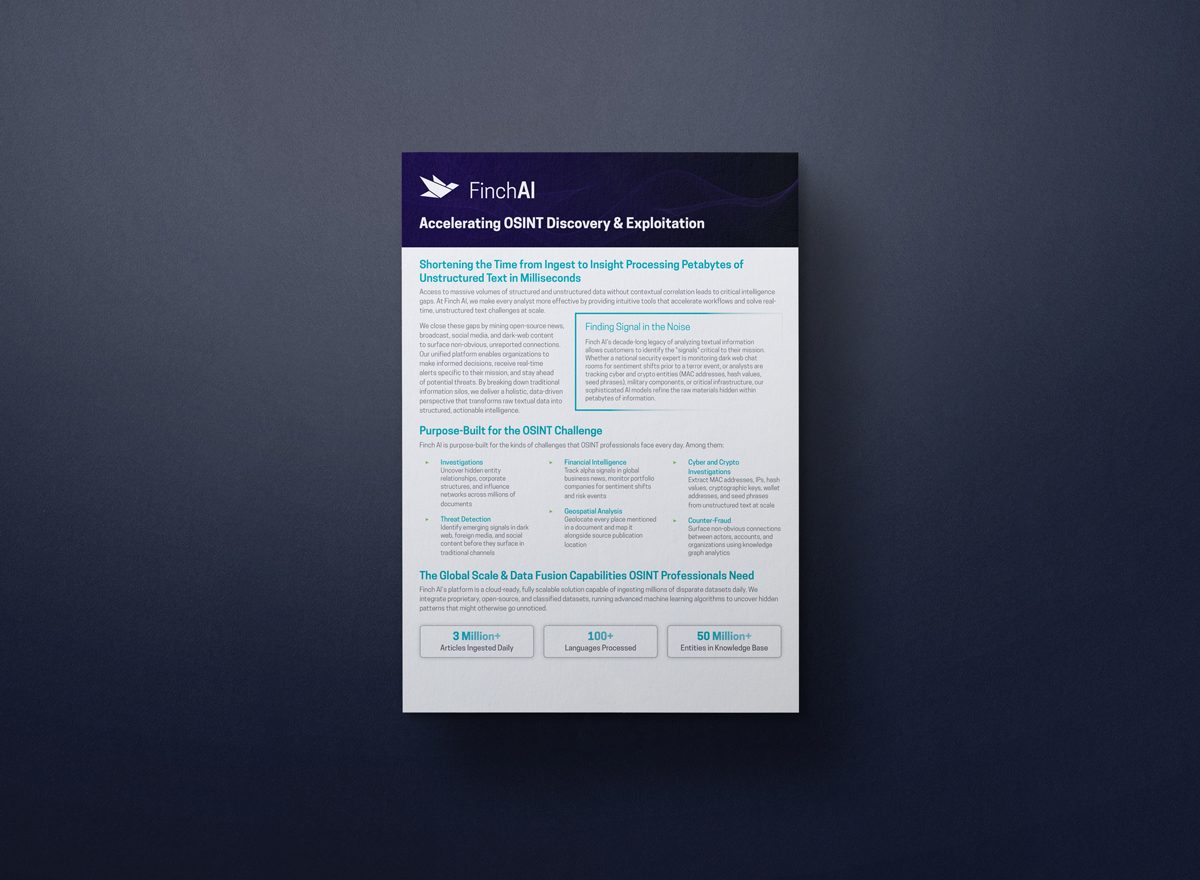
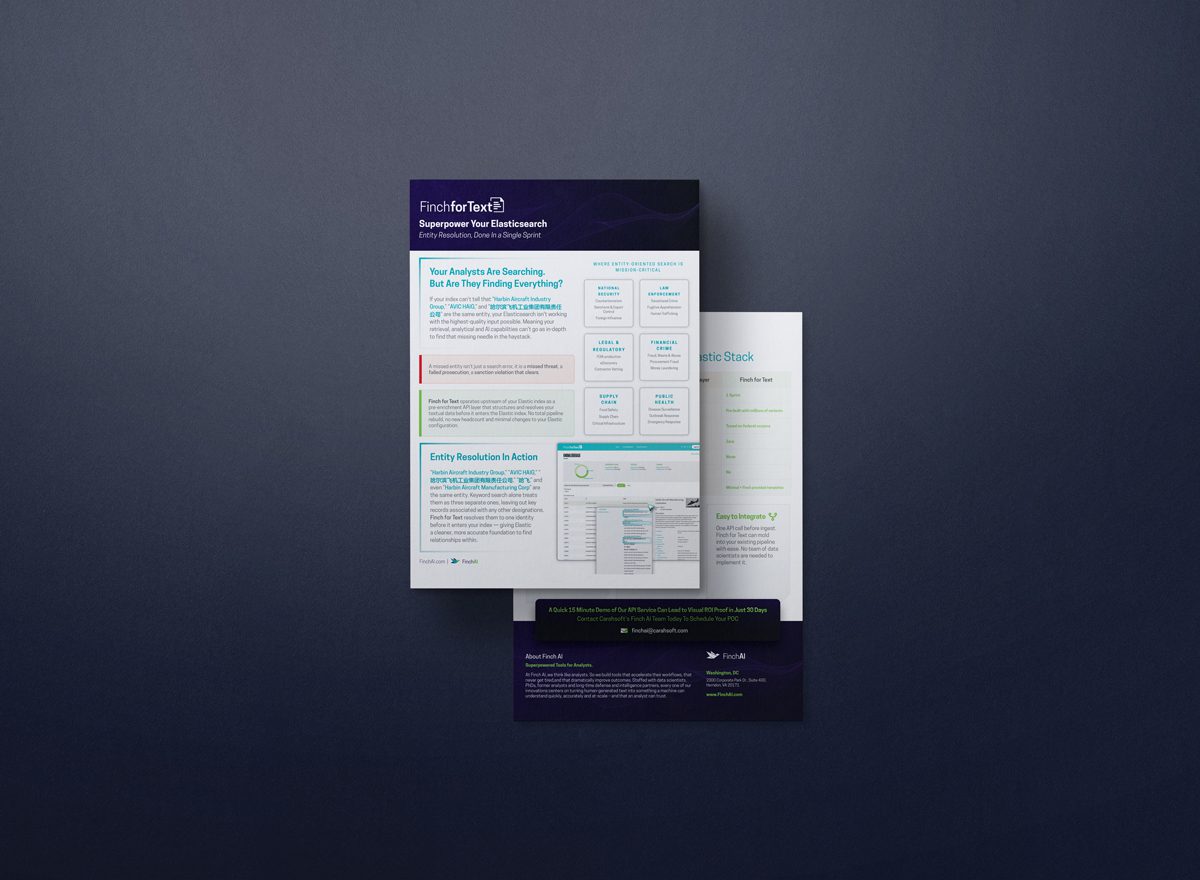
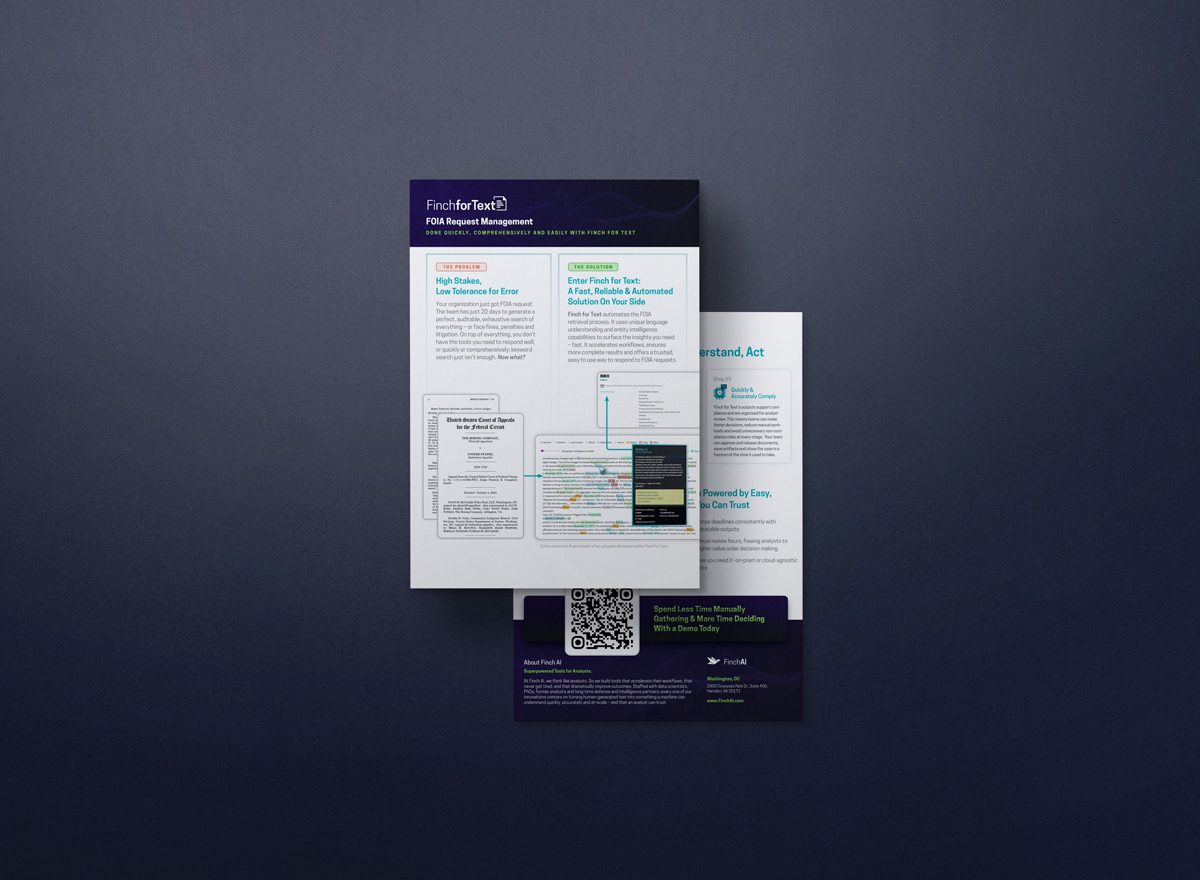
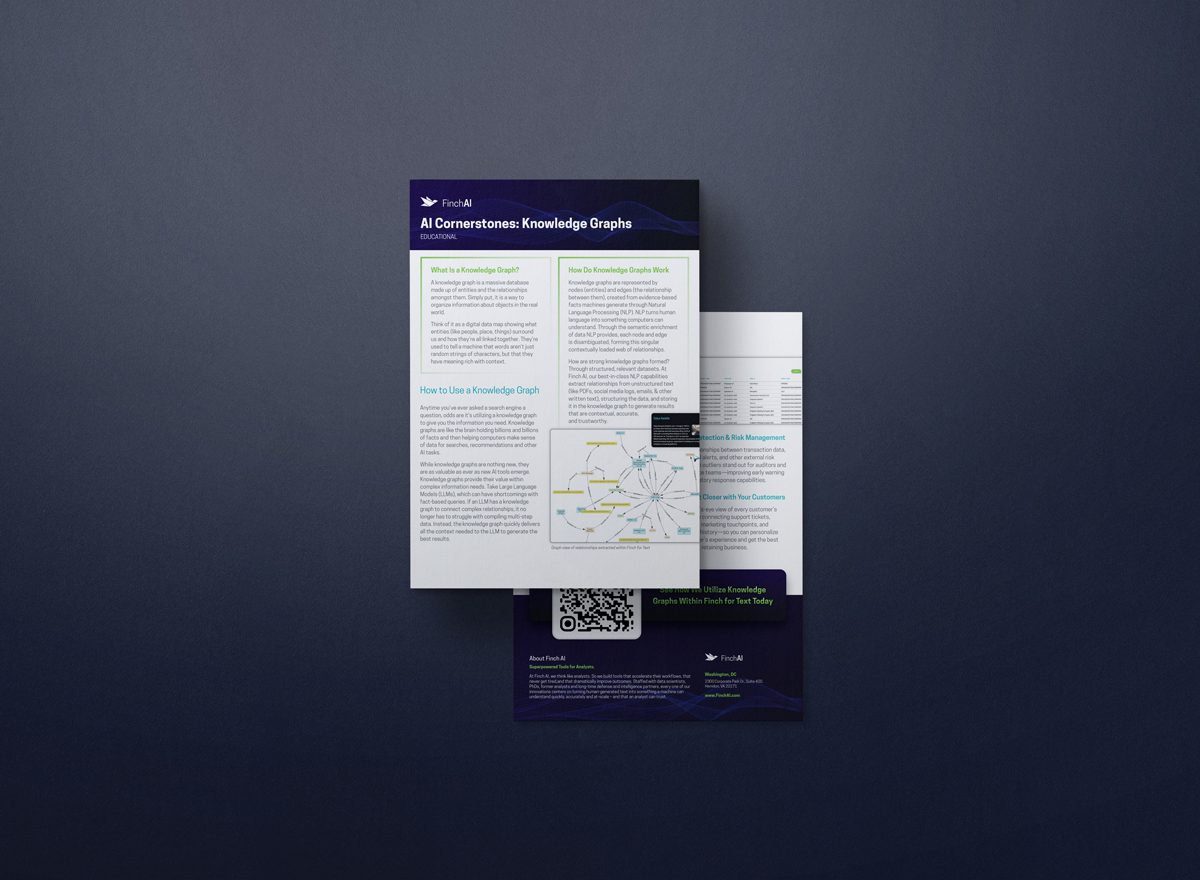
Finch for Text®, built for analysts by people who think like analysts, does exactly the same thing. It goes beyond LLMs and static databases and instead leverages a massive entity knowledge base, customer-curated datasets for the task, and relationships surfaced from both to generate insights. It turns human-generated text into something a machine can understand – but just as important, that an analyst can trust. It operates quickly, accurately and at-scale and gives sources for its insights. It “comes with receipts,” as the kids would say.
This is why we see Finch for Text® as the critical, foundational element in our AI platform. With it in place, analysts can gain real-time insights from massive, streaming datasets – and those insights are borne of next-generation sentiment analysis and high-fidelity entity-relationship mapping – both of which go far beyond the capabilities of a conventional LLM system. It enables a retrieval augmented generation (RAG) approach to offer entity intelligence and context that make your AI better.
Even with their shortcomings, LLMs and the subsequent popularity of generative AI, have made the promise of AI-enabled, automated insights from large corpuses of data more real than ever. It’s approachable for organizations in a way it just wasn’t before. An entire AI ecosystem has been born. And like every product ecosystem there are constantly new players and capability evolutions that emerge.
The AI landscape is only going to continue to evolve. The future is going to demand: more insights, from more sources, more quickly than ever. Implementing a solution like Finch for Text® will be more important than ever – and it will be exponentially harder to do the longer you wait.
That’s why today at Finch AI, we’re helping companies, agencies and organizations alike leverage our unique approach and our specialized experience to set their own, solid AI foundations – so they can secure their AI futures.
Learn more at www.finchai.com