

Enhancing Situational Awareness with AI-Powered Event Detection
In an increasingly complex world, situational awareness has become a critical aspect of decision making across various domains. Whether in security, emergency response, or finance, the ability to understand and respond to unfolding events in real-time can mean the difference between success and failure. However, achieving effective situational awareness poses significant challenges, particularly when it comes to processing large volumes of data quickly and accurately.
Situational awareness refers to the perception of environmental elements and events with respect to time and space, the comprehension of their meaning, and the projection of their status in the near future. It’s about having a clear understanding of what is happening around us and being able to anticipate what might happen next. This capability is invaluable across various domains, from security operations to disaster response and beyond.
Real-time situational awareness systems face several challenges, including the sheer volume and variety of data sources, the need for rapid processing and analysis, and the ability to filter out noise and irrelevant information. Traditional manual methods of collecting and analyzing data are often slow, labor-intensive, and prone to errors, making them unsuitable for real-time applications.
Event detection involves identifying and interpreting significant occurrences or patterns within a stream of data. This can range from manually scanning news articles for mentions of specific events to automatically analyzing sensor data for anomalies. However, traditional approaches to event detection are limited by the lack of diverse and comprehensive datasets for specific use cases, as well as the difficulty of parsing events from unstructured text such as news media.
AI-powered event detection offers a solution to these challenges by leveraging machine learning algorithms to parse events from large volumes of text and other data sources. By training models on diverse datasets, including GIS trajectories, surveillance footage, and social media feeds, we can not only identify events, but we can conflate them across multiple domains to provide a more comprehensive picture of what is happening in the world.
In addition to simply detecting events, AI and machine learning techniques can help us rapidly identify statistically significant precursors and forecast future events. AI-powered systems can also help enhance our understanding of the factors that drive these events such as rank importance and causal inferencing. By identifying the most important predictors of a given event type and simulating alternative scenarios, we can gain valuable insights into the underlying dynamics at play.
The applications of AI-driven event detection for situational awareness are virtually limitless. For example, in the world of finance, AI algorithms can be used to identify and forecast mergers and acquisitions between companies, enabling investors to make more informed decisions. In the realm of disaster response, AI-powered systems can help emergency responders improve response times and decision making by providing real-time updates on evolving situations. Similarly, a travel insurance company can quickly detect massive network disruptions and staff call centers according to anticipated changes in call volume.
At Finch AI, we understand the importance of trust in AI-powered systems. That’s why we build trust into our products at every level, from the quality of our data and the robustness of our algorithms to the transparency of our processes and the integrity of our outcomes. By harnessing the power of AI-driven event detection, we can enhance situational awareness across a wide range of domains, enabling better decision-making, providing value, and potentially saving lives.
Discover More
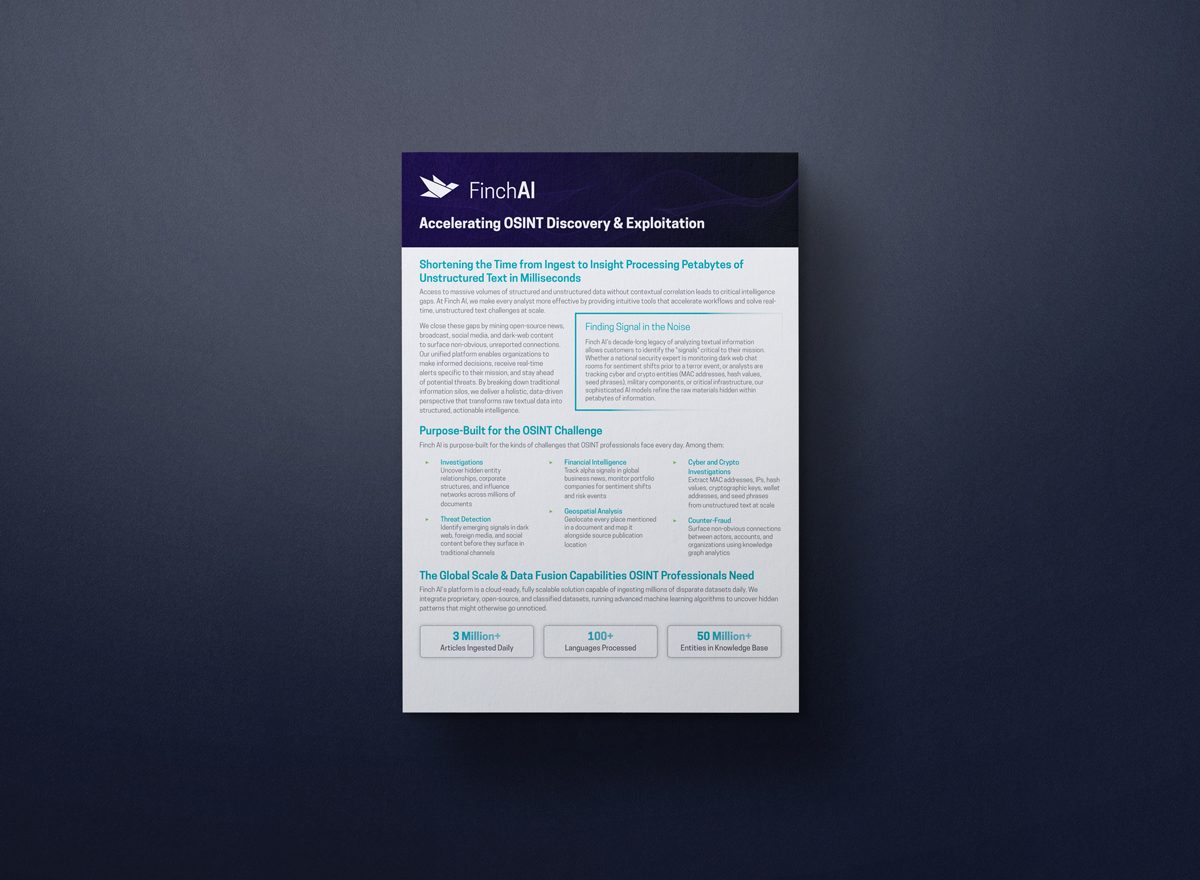
Accelerating OSINT Discovery & Exploitation
Finding Signal in the Noise OSINT professionals face an insurmountable of unstructured data daily–from news, to broadcast, social media, dark web content and more.…
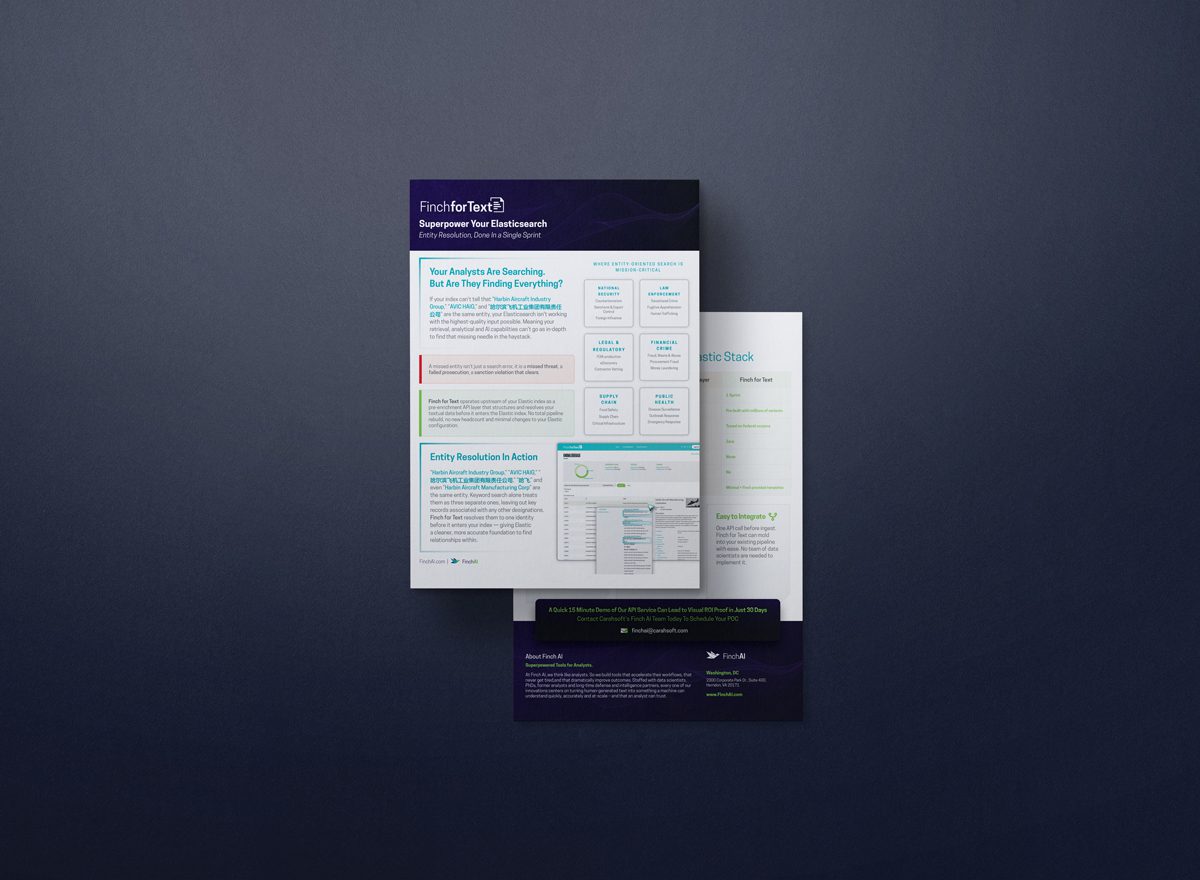
Superpower Your Elasticsearch: Entity Resolution, Done In a Single Sprint
Your Analysts Are Searching, But Are They Finding Everything? A missed entity isn't just a trivial search error – it is a missed threat.…
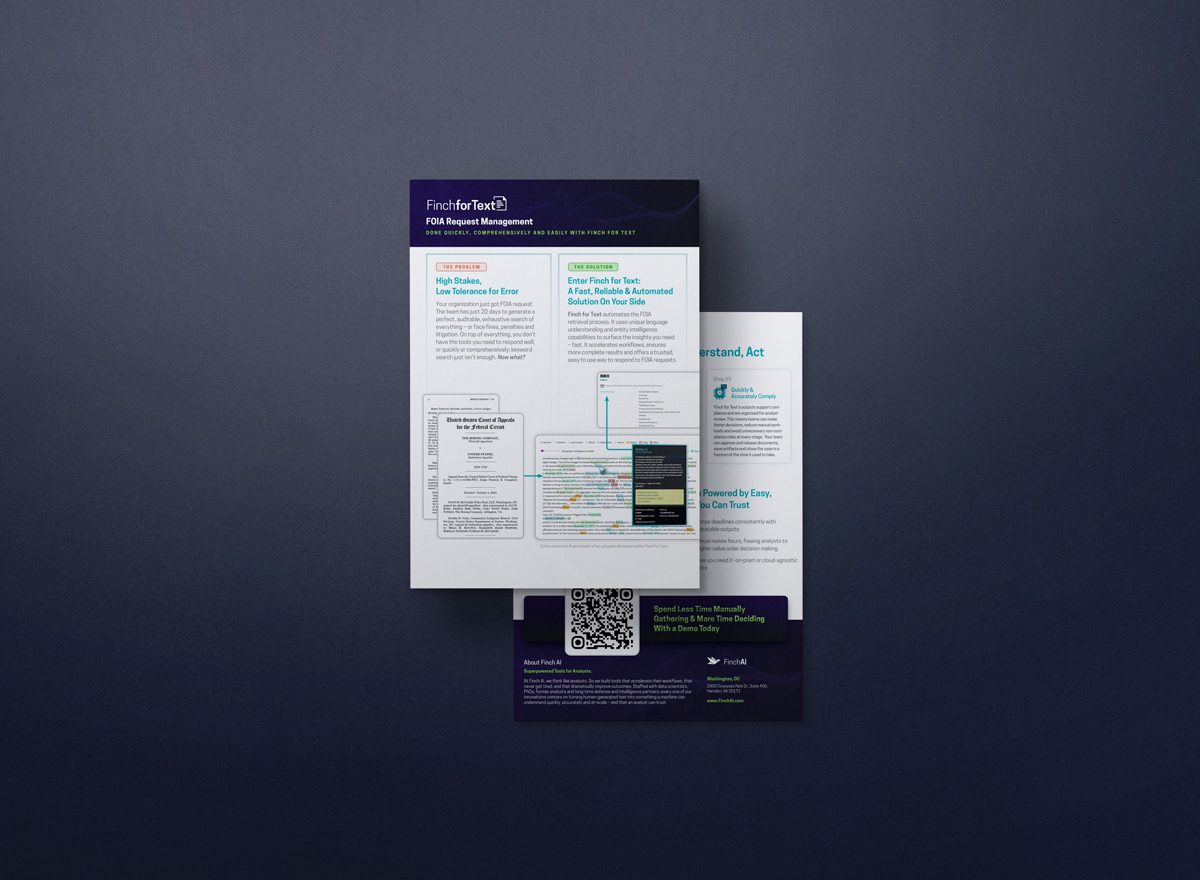
FOIA Request Management: Done Quickly, Comprehensively and Easily With Finch for Text
High Stakes, Low Tolerance for Error When a FOIA request lands, the clock starts immediately. Your team has just 20 days to generate a…
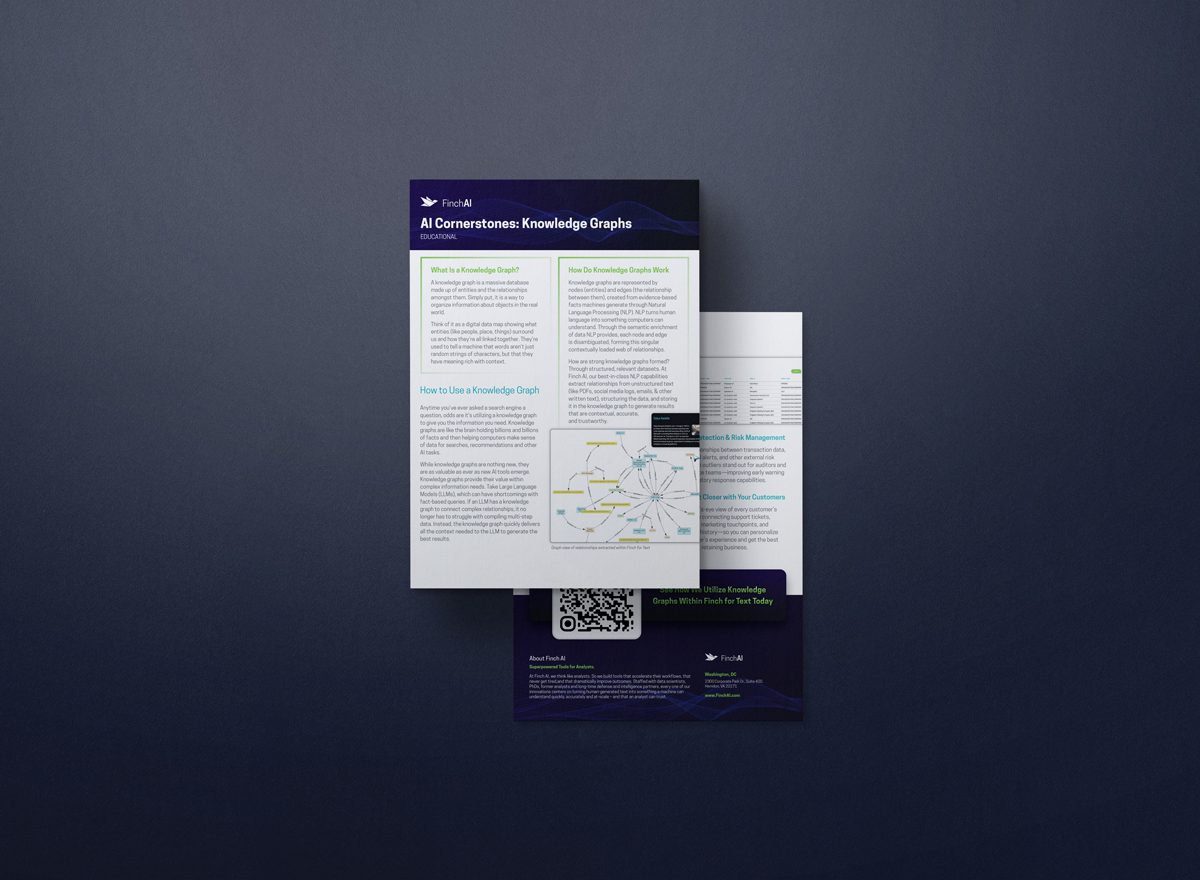
AI Cornerstones: Knowledge Graphs
Your Digital Data Map for Finding Relationships Generative AI and large language models are continuously advancing in mention and capability, but the underlying technology…
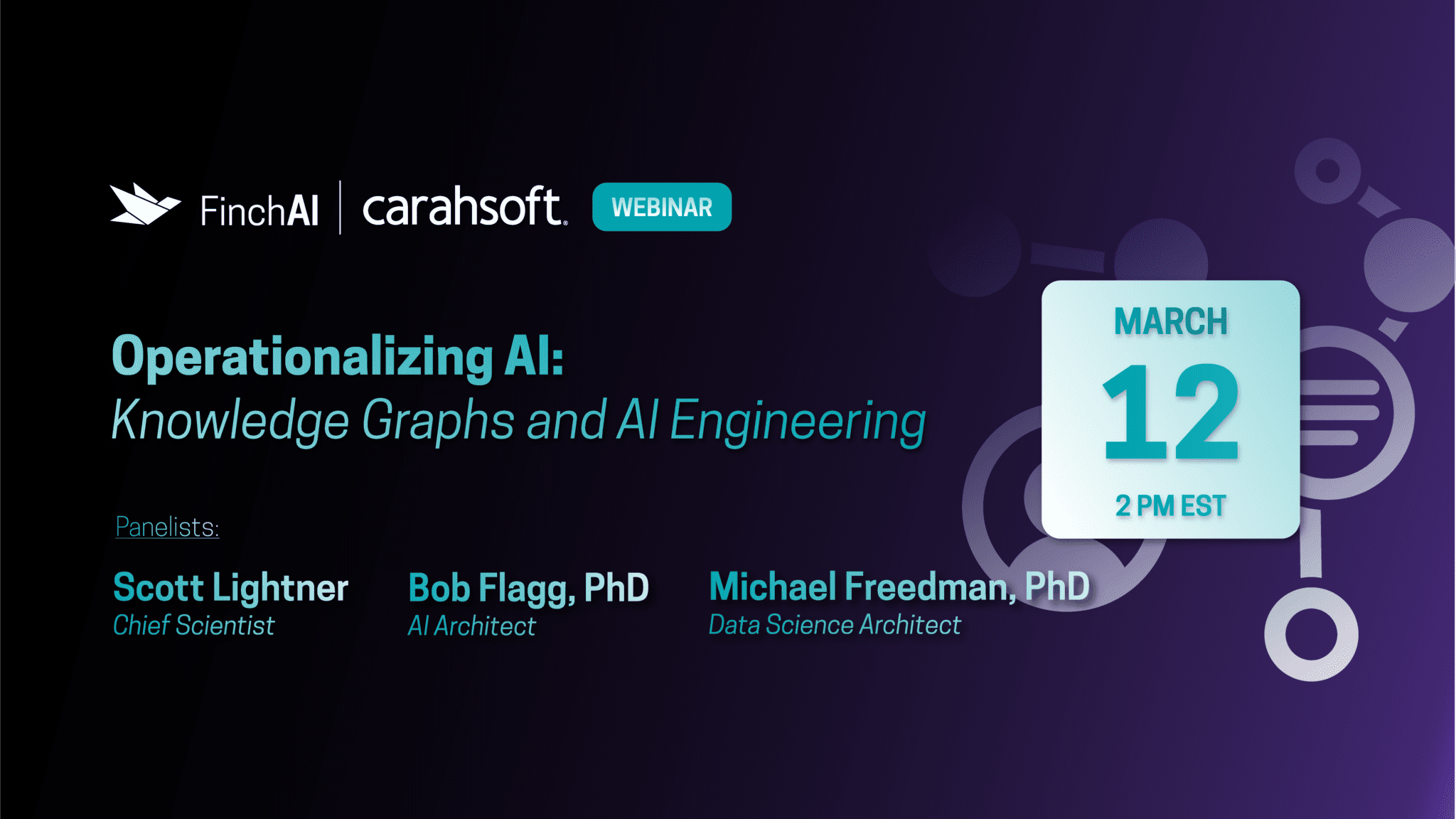
Operationalizing AI: Knowledge Graphs and AI Engineering
Following a November session on AI Agents, Finch AI and Carahsoft are pleased to present the second webinar in an educational series on operationalizing…

Research Security: Aligning Policy, Practice and Priorities to Secure the Innovation Enterprise
The U.S. faces growing challenges in protecting its innovation, research and development (R&D) enterprise, supply chain, critical infrastructure and investment capital from foreign influence,…

Research Security Realities and How to Overcome Them
Every year, our adversaries inflict hundreds of billions of dollars of economic damage to U.S. institutions and corporations. They do it by unlawfully accessing…

Research Security: In a Crowded Marketplace of Tools, Here’s What to Prioritize
The constellation of tools available to research security professionals is massive – and for good reason. Securing America’s innovation enterprise from malicious actors and…